

Safety Data Sheet – AMBRES LARMES Fragrance Oil
1 Product and Company Identification
1.1 Product Identifier
AMBRE LARMES E21107440
1.2 Relevant Identified Uses
Perfume composition, flavour or aromatical ingredient, for an industrial usage, that can be used in end-user product.
1.3 Details of the Supplier
Supplier: STOCK FRAGRANCE
Address: PO BOX 253, RIVER EDGE, NJ 07661
Telephone: 347-989-4511
Email: hello@stockfragrance.com
Address: PO BOX 253, RIVER EDGE, NJ 07661
Telephone: 347-989-4511
Email: hello@stockfragrance.com
1.4 Emergency Telephone Number
NCEC (regional): +1 215 207 0061
2 Hazards Identification
2.1 Classification of the Substance or Mixture
Physical hazards: No hazard specified.
Health dangers: Skin Irrit. 2 — Causes skin irritation. Skin Sens. 1 — May cause an allergic skin reaction. Eye Irrit. 2A — Causes serious eye irritation.
Environmental hazards: Aquatic Acute 1 — Very toxic to aquatic life.
Health dangers: Skin Irrit. 2 — Causes skin irritation. Skin Sens. 1 — May cause an allergic skin reaction. Eye Irrit. 2A — Causes serious eye irritation.
Environmental hazards: Aquatic Acute 1 — Very toxic to aquatic life.
2.2 Label Elements
GHS Pictograms:
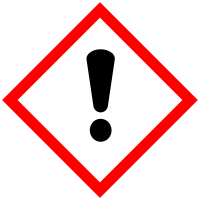 GHS07
GHS07
 GHS09
GHS09
Signal Word: WARNING
Hazard Statements:
| Code | Statement |
|---|---|
| H315 | Causes skin irritation. |
| H317 | May cause an allergic skin reaction. |
| H319 | Causes serious eye irritation. |
| H410 | Very toxic to aquatic life with long lasting effects. |
Precautionary Statements:
| Code | Statement |
|---|---|
| P280 | Wear protective gloves/protective clothing/eye protection/face protection. |
| P261 | Avoid breathing dust/fume/gas/mist/vapors/spray. |
| P273 | Avoid release to the environment. |
| P333+P313 | If skin irritation or rash occurs: Get medical advice. |
| P305+P351+P338 | IF IN EYES: Rinse with water for several minutes. Remove contact lenses, if present and easy to do. Continue rinsing. |
| P337+P313 | If eye irritation persists: Get medical advice. |
| P302+P352 | IF ON SKIN: Wash with plenty of soap and water. |
| P391 | Collect spillage. |
| P321 | Specific treatment (see this label). |
| P362 | Take off contaminated clothing and wash it before reuse. |
| P501 | Dispose of contents/container to an appropriate treatment and disposal facility in accordance with applicable laws and regulations, and product characteristics at time of disposal. |
| P272 | Contaminated work clothing should not be allowed out of the workplace. |
2.3 Other Hazards
None
3 Composition / Information on Ingredients
3.1 Substances
CAS-No.: Not applicable
3.2 Mixtures — Hazardous Substances
| Component | CAS | Concentration | Classification |
|---|---|---|---|
| BENZYL BENZOATE | 120-51-4 | ≥ 10%-20% | Acute Tox. 4 Oral, H302; Aquatic Acute 1, H400; Aquatic Chronic 2, H411 |
| OCTAHYDRO TETRAMETHYL ACETONAPHTONE | 54464-57-2 | ≥ 5%-10% | Skin irrit. 2, H315; Skin Sens. 1B, H317; Aquatic Chronic 1, H410 |
| BENZYL SALICYLATE | 118-58-1 | ≥ 5%-10% | Skin Sens. 1B, H317; Eye Irrit. 2B, H320; Aquatic Chronic 2, H411 |
| HELVETOLIDE (r) | 141773-73-1 | ≥ 1%-5% | Aquatic Chronic 2, H411 |
| PENTAMETHYLCYCLOPENT-3-EN-1-BUTANOL | 65113-99-7 | ≥ 1%-5% | Eye Irrit. 2A, H319; Aquatic Chronic 2, H411 |
| HEXYL CINNAMAL | 101-86-0 | ≥ 1%-5% | Skin Sens. 1B, H317; Aquatic Acute 1, H400; Aquatic Chronic 2, H411 |
| 3-ETHYL-5,5-DIMETHYL-gBUTYROLACTON | 66094-79-9 | ≥ 1%-5% | Aquatic Chronic 3, H412 |
| alpha CEDRENE | 469-61-4 | ≥ 1%-5% | Asp. Tox. 1, H304; Skin irrit. 2, H315; Aquatic Acute 1, H400; Aquatic Chronic 1, H410 |
| ETHYL MALTOL | 4940-11-8 | ≥ 1%-5% | Acute Tox. 4 Oral, H302 |
| DIHYDROPENTAMETHYL INDANONE | 33704-61-9 | ≥ 1%-5% | Skin irrit. 2, H315; Skin Sens. 1B, H317; Eye Irrit. 2A, H319; Aquatic Chronic 2, H411 |
| DIMETH. TETRAHYDROINDENOL DIOXANE | 27606-09-3 | ≥ 1%-5% | Acute Tox. 4 Oral, H302 |
| LORENOX | 900779-74-0 | ≥ 0.1%-1% | Skin Sens. 1B, H317; Eye Irrit. 2A, H319; Aquatic Acute 1, H400; Aquatic Chronic 1, H410 |
Ingredients having an occupational exposure limit value: See Section 8.
4 First Aid Measures
4.1 Description of First Aid Measures
IF ON SKIN (or hair): Remove/take off immediately all contaminated clothing. Rinse skin with water/shower.
IF IN EYES: Rinse cautiously with water for several minutes. Remove contact lenses, if present and easy to do. Continue rinsing.
IF SWALLOWED: Rinse mouth. Do NOT induce vomiting.
IF INHALED: Remove victim to fresh air and keep at rest in a position comfortable for breathing.
IF IN EYES: Rinse cautiously with water for several minutes. Remove contact lenses, if present and easy to do. Continue rinsing.
IF SWALLOWED: Rinse mouth. Do NOT induce vomiting.
IF INHALED: Remove victim to fresh air and keep at rest in a position comfortable for breathing.
4.2 Most Important Symptoms and Effects
Get medical attention if symptoms persist.
4.3 Immediate Medical Attention
Never give liquid to an unconscious person.
5 Fire-Fighting Measures
5.1 Suitable Extinguishing Media
Water, CO₂ or Foam. Avoid water in straight hose stream; will scatter and spread fire.
5.2 Special Hazards
Avoid breathing dust or vapor. Cool containers exposed to flames with water until well after the fire is out.
5.3 Advice for Firefighters
No specific precautions.
6 Accidental Release Measures
6.1 Personal Precautions
Contain spillages with sand, earth or any suitable adsorbent material.
6.2 Environmental Precautions
There must be no release into the environment.
6.3 Containment and Cleanup
Collect with non-combustible absorbent material. Flush with water. Dike for large spills.
6.4 Reference to Other Sections
See Section 8 for Personal Protective Equipment. See Section 13 for waste disposal.
7 Handling and Storage
7.1 Precautions for Safe Handling
Keep strict control of dust accumulation to a minimum. Maintain adequate local and general ventilation where product is handled. Avoid any sources of ignition. Good personal washing routines should be followed.
7.2 Conditions for Safe Storage
Keep only in the original container in an appropriate place.
7.3 Specific End Uses
No specific precautions.
8 Exposure Controls / Personal Protection
8.1 Control Parameters
| Component | CAS | Concentration | OEL (ppm) |
|---|---|---|---|
| None | |||
8.2 Exposure Controls
Environmental: Discharge, treatment, or disposal may be subject to national, state, or local laws.
Respiratory: In case of inadequate ventilation use suitable respirator.
Eye: Wear goggles/face shield.
Hand: Gloves.
Skin: Wear suitable protective clothing. Provide adequate ventilation if fumes or vapors are generated.
Respiratory: In case of inadequate ventilation use suitable respirator.
Eye: Wear goggles/face shield.
Hand: Gloves.
Skin: Wear suitable protective clothing. Provide adequate ventilation if fumes or vapors are generated.
9 Physical and Chemical Properties
9.1 Basic Physical and Chemical Properties
| Property | Value |
|---|---|
| Physical State | Liquid |
| Color | Colorless to Yellow |
| Odor | Characteristic |
| pH | No data available |
| Melting Point | No data available |
| Boiling Point | No data available |
| Flash Point | > 212 °F |
| Evaporation Rate | No data available |
| Flammability (solid, gas) | No data available |
| Upper/Lower Flammability Limits | No data available |
| Vapor Pressure | No data available |
| Vapor Density | No data available |
| Specific Gravity | 0.9914 / 1.0014 |
| Solubility | No data available |
| Log Pow | No data available |
| Auto Ignition Temp. | No data available |
| Decomposition Temp. | No data available |
| Viscosity at 40 °C | No data available |
| Explosive Properties | No data available |
| Oxidizing Properties | No data available |
9.2 Other Information
No other information noted.
10 Stability and Reactivity
10.1 Reactivity
No data available.
10.2 Chemical Stability
Stable under normal temperature conditions and recommended use.
10.3 Possibility of Hazardous Reactions
No data available.
10.4 Conditions to Avoid
Store cool, dry, with adequate ventilation. Keep away from incompatible materials, open flames, and high temperatures.
10.5 Incompatible Materials
No data available.
10.6 Hazardous Decomposition Products
No data available.
11 Toxicological Information
11.1 Toxicological Effects
| Endpoint | Value |
|---|---|
| LD50 Dermal (mg/kg) | > 5000 |
| LD50 Oral (mg/kg) | 3370.1 |
| LC50 Inhalation — vapor (mg/L) | > 100 |
11.2 Other Toxicological Data
This product has not been subject to toxicological testing as an entity. According to available data on the constituents, the health classification criteria are met.
11.3 Carcinogen Information
12 Ecological Information
12.1 Ecotoxicity
No data available.
12.2 Persistence and Degradability
No data available.
12.3 Bioaccumulative Potential
No data available.
12.4 Mobility in Soil
No data available.
13 Disposal Considerations
13.1 Waste Treatment and Disposal Methods
Do not release to the environment. Dispose of contents/container to an appropriate treatment and disposal facility in accordance with applicable laws and regulations. Keep original labels on containers.
14 Transport Information
14.1 UN Number
UN 3082
14.2 UN Proper Shipping Name
ENVIRONMENTALLY HAZARDOUS SUBSTANCE, LIQUID, N.O.S. (PERFUMERY PRODUCTS)
14.3 Transport Hazard Class
Class 9
14.4 Packing Group
PG III
14.5 Environmental Hazards
P — Pollutant
14.6 Special Precautions for User
No data available.
14.7 IATA
Class 9 / PG III
14.8 IMDG
Class 9 / PG III. Marine pollutants: P - pollutant.
15 Regulatory Information
15.1 Safety, Health and Environmental Regulations/Legislation Specific for the Substance or Mixture
This product is regulated under the GHS (Globally Harmonized System) and is subject to OSHA labeling requirements.
16 Other Information
16.1 Full Text of Hazard Statements
| Code | Statement |
|---|---|
| H302 | Harmful if swallowed. |
| H304 | May be fatal if swallowed and enters airways. |
| H315 | Causes skin irritation. |
| H317 | May cause an allergic skin reaction. |
| H319 | Causes serious eye irritation. |
| H320 | Causes eye irritation. |
| H400 | Very toxic to aquatic life. |
| H410 | Very toxic to aquatic life with long lasting effects. |
| H411 | Toxic to aquatic life with long lasting effects. |
| H412 | Harmful to aquatic life with long lasting effects. |
16.2 Abbreviations and Acronyms
OSHA: Occupational Safety and Health Administration · GHS: Globally Harmonized System · ECHA: European Chemical Agency · CLP: Classification, Labelling and Packaging · REACH: Registration, Evaluation, Authorisation and Restriction of Chemicals · PPE: Personal Protective Equipment · PBT: Persistent, Bioaccumulative and Toxic
16.3 Information about Preparation
Issue date: 22 MAR 2023 · Version 6